
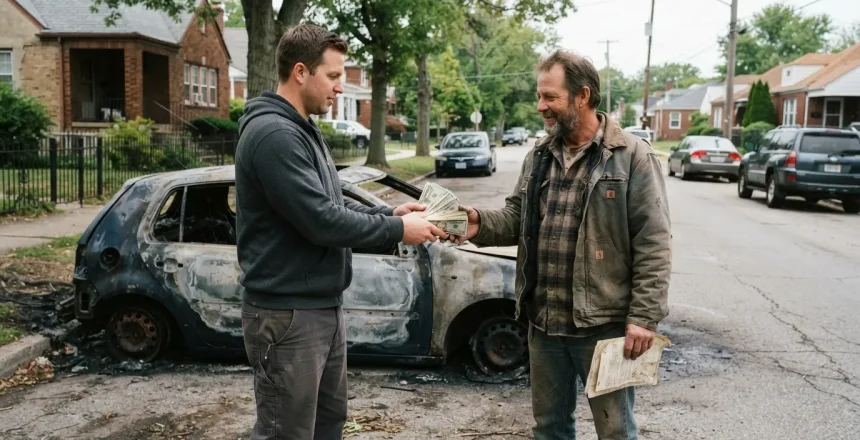
A vehicle fire can change the condition of a car almost instantly. Even when the fire is put out before the entire vehicle is destroyed, heat, smoke, soot, wiring damage, and melted components can leave the car expensive or impractical to repair.
That leaves many owners asking a straightforward question: Can you sell a fire-damaged car for cash?
In many situations, yes. A fire-damaged vehicle can still have value even when it is no longer suitable for normal road use. Depending on its condition, the vehicle may have value as a source of replacement parts, recyclable metal, or salvage.
However, selling a burned vehicle is different from selling an ordinary used car. The vehicle’s title, insurance status, extent of damage, location, and applicable state requirements can all affect the selling process.
If you want to sell fire damaged car, understanding these factors can help you avoid unnecessary repairs, paperwork problems, and unrealistic expectations about its value.
Is a Fire-Damaged Car Still Worth Money?
A car does not necessarily become worthless after a fire.
Its remaining value depends heavily on what was damaged and what components remain usable. A vehicle with damage concentrated in one area may have more recoverable parts than a car that has experienced extensive damage throughout the engine compartment, cabin, electrical system, and body.
The vehicle’s make, model, year, mileage, parts demand, title status, and overall condition can also influence its salvage value.
For example, a newer vehicle may contain components that are valuable to a dismantler even if repairing the entire car would not make financial sense. An older vehicle may have less resale value but can still contain recyclable metals and usable parts.
There is no universal cash amount for a fire-damaged vehicle. Two cars with similar damage can have different values because of their make, model, condition, location, and paperwork.
What Happens to a Car After a Fire?
Fire damage can affect much more than the area where the flames were visible.
Extreme heat can damage wiring, plastic components, sensors, hoses, paint, glass, interior materials, and mechanical components. Smoke and soot can also contaminate areas that did not burn directly.
The U.S. Fire Administration identifies mechanical and electrical problems among common causes of vehicle fires and advises people not to return to a burning vehicle or attempt to fight the fire themselves.
After a serious fire, you should not assume that the vehicle is safe to drive simply because the flames have been extinguished.
If the vehicle cannot safely operate, professional towing is generally more appropriate than attempting to drive it to a buyer or repair facility.
Can You Sell Fire Damaged Car Without Repairing It?
In many cases, you do not have to completely repair a fire-damaged vehicle before selling it.
This is one reason salvage and junk-car buyers exist. A damaged vehicle can be evaluated based on its remaining components and materials rather than its value as a normal roadworthy car.
Before spending thousands of dollars on repairs, consider what the vehicle is realistically worth in its current condition and what the estimated repair bill would be.
Fire damage can involve electrical systems and other components that are difficult to evaluate from a quick visual inspection. Repair costs can therefore increase as additional damage is discovered.
If the vehicle has substantial damage, selling it in its existing condition may be an option worth investigating.
The key is to describe the vehicle honestly. Tell prospective buyers that it has experienced fire damage and provide whatever information you know about the affected areas.
How Much Is a Fire-Damaged Car Worth?
There is no fixed price for a burned vehicle.
Several factors can influence the amount a buyer may offer.
| Factor | What It Means | Why It Matters |
|---|---|---|
| Fire severity | How much of the vehicle was affected | Extensive damage can reduce the number of usable components |
| Make and model | The vehicle’s manufacturer and model | Demand for replacement parts can affect salvage value |
| Vehicle age | How old the car is | Newer vehicles may have higher parts value, although condition remains important |
| Mileage | How far the vehicle was driven before the fire | Can provide context about the vehicle’s previous use |
| Title status | Clean, salvage, junk, rebuilt, or another designation | Determines how the vehicle can be transferred or used |
| Missing parts | Components removed or destroyed by the fire | Fewer recoverable parts can reduce value |
| Location | Where the vehicle is located | Local salvage and recycling markets can differ |
| Vehicle condition | Whether the vehicle can move or requires towing | Transportation requirements can affect the transaction |
A buyer will usually need information about the actual damage before making a meaningful offer.
Does Insurance Cover Fire Damage to a Car?
Insurance should be considered before you sell a fire-damaged vehicle.
According to the National Association of Insurance Commissioners, comprehensive auto insurance generally covers damage caused by events other than collisions, including fire. The specific terms of a policy, deductible, exclusions, and claim process depend on the policy and applicable state requirements.
If your vehicle was insured with comprehensive coverage when the fire occurred, contact your insurance company before transferring ownership.
An insurer may inspect the vehicle and determine whether it should be repaired or treated as a total loss. If the vehicle is declared a total loss, the insurer may take possession of it as part of the settlement.
The situation can also be more complicated if you still have an auto loan. A lender may have a legal interest in the vehicle until the loan is paid off.
For that reason, resolve questions involving your insurer and lienholder before arranging a sale.
Can You Sell a Fire-Damaged Car With a Salvage Title?
A salvage title does not automatically mean that a vehicle has no monetary value.
It does mean that the vehicle has received a special title designation under applicable state rules. The exact definition and requirements vary across the United States.
New York provides a useful example. Its DMV states that a vehicle can qualify as a salvage vehicle when it has significant damage or has been transferred to an insurance company under circumstances covered by the state’s salvage rules. New York also uses a 75% threshold based on the vehicle’s pre-damage retail value for certain salvage classifications.
If a salvage vehicle is rebuilt for roadway use, New York requires a salvage examination before the DMV can issue a new title certificate or registration. A rebuilt salvage vehicle can receive a corresponding title brand.
Other states use different terminology and requirements.
This is important if you plan to sell fire damaged car because the title classification can affect which buyers are interested and what can legally be done with the vehicle afterward.
Before completing a transaction, check the DMV or motor vehicle agency requirements in the state where the vehicle is titled.
What Paperwork Do You Need?
The paperwork depends on your state and the vehicle’s title status.
In general, sellers should gather their ownership documents before trying to complete the transaction.
You may need:
- Vehicle title or other acceptable proof of ownership
- Government-issued identification
- Lien release, when applicable
- Salvage or damage documentation
- Registration documents, depending on state requirements
- Bill of sale, where required
- Insurance documentation if an active claim is involved
The title is particularly important because it establishes ownership and allows the transaction to be documented properly.
If the title carries a salvage, junk, rebuilt, or another brand, disclose that information rather than presenting the vehicle as an ordinary clean-title vehicle.
If you do not have the title, contact your state’s motor vehicle agency to determine whether a replacement title or another ownership document is available.
Should You Repair a Fire-Damaged Vehicle Before Selling It?
Not necessarily.
Repairing a burned vehicle can make sense in some circumstances, but it should not be assumed that repairs will automatically increase your financial return.
Fire can affect electrical wiring, sensors, electronic modules, mechanical components, interior materials, and body parts. A repair estimate based on visible damage may not account for every problem.
Before investing money in repairs, compare:
- The estimated repair cost
- The vehicle’s pre-fire market value
- Its current salvage value
- Its title status
- The likely cost of parts and labor
- Whether the repaired vehicle would require additional inspections or title branding
For a severely damaged vehicle, selling it for salvage or parts may be more practical than attempting to restore it.
The decision should be based on the actual numbers rather than the assumption that a repaired car will always be worth more.
How Should You Prepare a Fire-Damaged Car for Sale?
You do not need to turn a burned vehicle into a showroom-ready car before contacting a salvage or junk-car buyer.
Instead, focus on providing accurate information.
Gather the vehicle details
Have the year, make, model, mileage, VIN, title status, and location available.
Photograph the damage
Take clear photographs of the exterior and interior if it is safe to do so. Photos of the engine compartment and visibly damaged areas can also help a buyer understand the vehicle’s condition.
Locate your title
Find the title or other proof of ownership required in your state.
Check your insurance status
If an insurance claim is pending, communicate with your insurer before transferring the vehicle.
Explain the condition honestly
Mention whether the fire affected the engine compartment, cabin, trunk, electrical system, or other areas that you know about.
Confirm towing arrangements
If the vehicle cannot be driven, ask how transportation will be handled. Do not attempt to drive a seriously damaged vehicle simply to deliver it to a buyer.
What Happens to the Vehicle After You Sell It?
A fire-damaged vehicle may eventually enter the salvage, dismantling, recycling, or parts market.
Depending on its condition, usable components may be recovered before the remaining vehicle is processed for recycling.
End-of-life vehicle processing also involves environmental considerations. The U.S. Environmental Protection Agency identifies fluids, batteries, refrigerants, fuel, tires, airbags, and other components as materials that need appropriate handling during vehicle recycling and disposal.
This is particularly relevant for electric and hybrid vehicles. Large lithium-ion vehicle batteries require specialized handling, and the EPA advises that medium and large batteries should be managed through appropriate channels rather than placed in ordinary trash or recycling.
Vehicle recycling is therefore more involved than simply crushing a car. Proper handling helps recover useful materials while reducing risks associated with fluids, batteries, refrigerants, and other components.
What Should You Check Before Accepting an Offer?
Before you sell fire damaged car, take a few minutes to understand exactly what you are agreeing to.
Ask the buyer:
- What information do you need from me?
- Is the title required?
- Does the vehicle’s title brand affect the transaction?
- How will the vehicle be picked up?
- Is towing included in the offer?
- What paperwork will be completed during the sale?
- When and how will payment be made?
- Are there any conditions that could change the quoted amount?
A clear transaction should leave you knowing what paperwork is required, how the vehicle will be collected, and what you are being paid.
Do not hide the fire damage. Giving accurate information from the beginning can make the evaluation and selling process much more straightforward.
Turn Your Fire-Damaged Car Into a Practical Selling Opportunity With NYC Cash for Junk Cars
If you are looking to sell fire damaged car, NYC Cash for Junk Cars can be an option to consider when exploring ways to move on from a damaged or unwanted vehicle.
The important part is to start with the facts about your vehicle. Know its title status, understand the extent of the fire damage, check whether an insurance claim is involved, and have the basic vehicle information ready.
A fire-damaged car may no longer make sense to repair, but that does not necessarily mean it has no remaining value. Depending on its condition, parts, materials, and salvage potential may still give the vehicle a market.
Before making a decision, compare your options and understand the paperwork required in your state. If selling the vehicle in its current condition makes financial and practical sense, getting a clear evaluation can be the next step.
- National Association of Insurance Commissioners, Auto Insurance consumer information. Comprehensive coverage and fire-related vehicle damage.
NAIC Auto Insurance Consumer Information - National Association of Insurance Commissioners, Auto Insurance topic information.
NAIC Auto Insurance Overview - U.S. Fire Administration, Vehicle Fire Safety. Guidance on vehicle fires and immediate safety precautions.
U.S. Fire Administration Vehicle Fire Safety - New York State Department of Motor Vehicles, Information and Regulations for Junk & Salvage Businesses. Salvage vehicle definitions and examination requirements.
New York DMV Salvage and Junk Vehicle Information - U.S. Environmental Protection Agency, Automobiles, Tires, and Boats. Guidance concerning end-of-life vehicle components and environmental management.
EPA Automobiles, Tires, and Boats - U.S. Environmental Protection Agency, Processing End-of-Life Vehicles. Guidance on handling batteries, refrigerants, fuel, fluids, and other vehicle materials.
EPA Processing End-of-Life Vehicles Guide - U.S. Environmental Protection Agency, Lithium-Ion Battery Recycling. Information on end-of-life lithium-ion batteries, including electric vehicle batteries.
EPA Lithium-Ion Battery Recycling


